Enfermedad terminal de la madre de Blanca
También esto pasaráEnfermedad terminal de la madre de Blanca is the prolonged illness that transforms Blanca’s relationship with her mother and makes caregiving an increasingly painful part of their final months together. As her mother’s body and mind fail, Blanca moves between hospital visits, emergencies at home, practical responsibilities, and the desire to escape the demands of a crisis she cannot control. The illness does not resolve their complicated history; instead, it brings old hurts and fierce attachment into the same frame, culminating in a silent farewell that Blanca understands even when no words can be spoken.
Decline and the struggle to keep living
The mother had been accustomed to resisting defeat. As her strength, mental clarity, and circle of friends diminished, fear began to accompany the woman who had once seemed unafraid. She saw time running out but retained an intense desire to live. In Blanca’s recollection, her mother fought every battle and was accustomed to winning; only on the last day did she seem to acknowledge that this one could not be won. The account locates the illness not just in physical decline but in the gradual loss of the capacities and relationships that had sustained her.
The decline also altered the mother’s presence in her own home. During the final months, Blanca interviewed prospective caregivers, many of whom lasted only a couple of days. Her mother kept them awake, took her medication, and left pills scattered among her sheets, papers, and books. She repeatedly dismissed caregivers, sometimes several times in a day, and eventually slapped one of them. Blanca remembers the incidents as distressing precisely because the person acting this way was her mother: behavior that might once have seemed absurd or laughable in someone else became part of the family’s painful daily reality. Doctors sometimes said the mother was inventing her pain, adding uncertainty to Blanca’s effort to understand and respond to what was happening.
Caregiving under pressure
The telephone became a persistent link to the crisis. Her mother called in the middle of the night asking Blanca to come over, saying she was afraid and that a caregiver wanted to kill her. Blanca had children to care for and could not always leave them alone at four in the morning. When she explained that limit, her mother sometimes became indignant and hung up. Many of their conversations ended the same way. The calls could be about money or accusations that Blanca had abandoned her, rather than the loving apology or reassurance Blanca sometimes hoped to hear.
The phone’s ordinary function was overwhelmed by its role as a messenger of suffering and alarm. When Blanca saw her mother calling, her heart lurched; she began forgetting to charge the phone, leaving it in different places, and losing it deliberately. Eventually she disconnected it. Blanca does not present this as a clean decision or a final refusal of responsibility. She says she did what she could and sometimes did what she had to do, but not always; she admits she was not good at facing the misery of the situation and apologizes to her mother in retrospect. That mixture of action and self-reproach makes the caregiving story more complicated than a record of tasks completed: the daughter is trying to protect her mother while also recognizing the limits of her own endurance.
Hospital and farewell
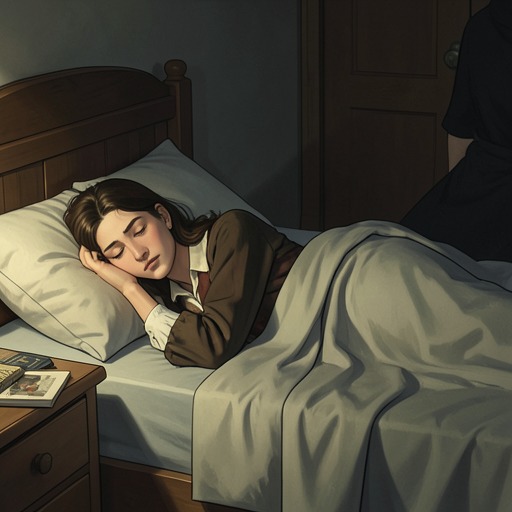
Before the final admission, the mother spent two months in a nursing home that Blanca later recalled through the disturbing image of a place resembling a film about the living dead. The last hospital became another persistent setting in Blanca’s nightmares. On the bed there, her mother was suffering from her third bout of pneumonia. Blanca reassured her that she would recover and told her that Blanca and the children would be all right, that everything was in order. Her mother could no longer speak. She looked steadily at Blanca and began to cry without sound or visible movement in her face.
Ana, her mother’s closest friend, suggested that the air conditioning might be irritating her eyes, perhaps in an effort to protect Blanca. Blanca was convinced that the tears were her mother’s way of saying goodbye. She held her hand gently and repeated her reassurance, while understanding that the exchange meant something different to her mother than the words suggested. Blanca’s account stresses the gap between what she said to soothe her mother and what she knew had become true: the battle was ending, and neither a promise of recovery nor a final spoken sentence could undo it.
The mother’s loss of lucidity was itself part of the suffering. Blanca had expected death, but says that they had never imagined it would take her mother’s mind before taking the rest of her. What remained, at times, were only fragments of lucidity, which Blanca saw as giving her mother further pain rather than restoring her former self. This is why the final farewell is conveyed through a look and silent tears instead of speech: the illness has taken away the very means by which a conventional last exchange might have been made.
Reversal of the mother-daughter roles
The illness reverses the roles between mother and daughter. In the hospital’s last days, the mother called Blanca by the name of a mother on several occasions. Blanca recognizes the painful irony: as her mother died, Blanca had to become her mother. The reversal does not erase their earlier conflicts. For years, the mother had said she did not love her own mother and believed that she had not been a good person or had never loved her; only near the end did she change her mind. Blanca also remembers that her own relationship with her mother had been difficult, and that their love had become painful well before the final hospital stay.
Months earlier, when death still seemed unthinkable, the mother told Blanca that knowing her had been an honor. She said this casually while going to the bathroom to fetch something, at a point when the two were struggling with the pain in their relationship. Blanca asked her to repeat it, laughed, and dismissed it as nonsense; within minutes, they were arguing again. In retrospect, she understands the remark as an early recognition that their long period of unresolved pauses was ending. The illness thus gathers meaning across time: a sentence that passed almost unnoticed when it was spoken becomes, after the hospital farewell, part of Blanca’s understanding of what her mother already knew.
Aftermath and continuing presence
The illness remains present in Blanca’s mourning after her mother’s death. In the days that follow, people remind her that many people love her, but she longs instead for her mother to sit beside her, hold her hand, and place a hand on her forehead. She remembers the helplessness of the final months even as she longs for the comfort of the person whose decline created that helplessness. The loss is not a simple release from an ordeal; it leaves Blanca with the absence of the mother she cared for and the memory of the mother who once cared for her.
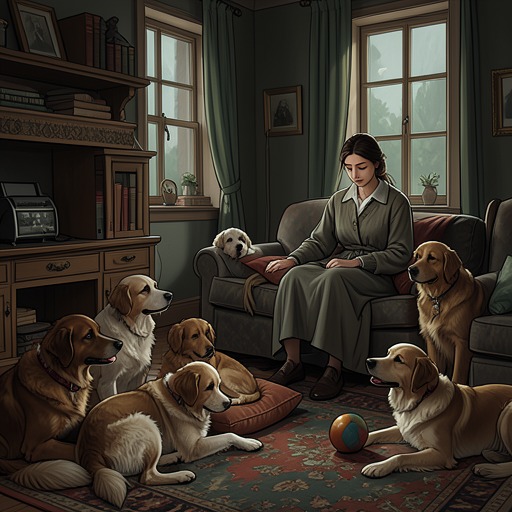
Later, at dawn, Blanca goes alone toward the cemetery in Port Lligat but finds its gate shut. Exhausted, crying, and unable to reach her mother’s grave, she sees her mother in an imagined scene by the harbor: walking toward her boat with her three dogs, smiling, and telling Blanca that this too will pass. The encounter does not reverse the death or cancel the failed visit. Instead, it gives the continuing bond between them a form shaped by memory: the mother appears as she was in life, moving freely toward the sea, while Blanca remains in the present, trying to endure what has happened.
That bond also persists in ordinary family life. Blanca notices her older son silently looking toward the balcony of the last apartment where his grandmother lived when they pass it by car. She considers telling him that his grandmother is in a better place, then rejects the reassurance because she knows how much his grandmother loved being with him and with Blanca. The illness and death therefore change the mother’s place in the family without making her disappear from it: her absence is carried in the children’s gestures, Blanca’s recollections, and the continuing effort to speak honestly about the life they shared.